


Printing Machine
Your Professional Printing Machine Supplier
Our goal is to become your true partner in the field of auxiliary machine China. Qingdao Zhongsu Machinery Manufacturing Co., Ltd. is committed to the design, development and manufacturing of plastic machinery, enabling its extrusion equipment technology and manufacturing techniques to rank among the leading and dominant positions in the industry. We have a skilled engineering team dedicated to refining every stage, from product development and process improvement to production oversight, ensuring every product delivered meets rigorous quality and performance standards. The price is competitive and the product is quality-assured, which is a good choice for your long-term cooperation.

Why Choose Us
Our Certifications
The company has obtained ISO9001 quality management system certification and passed the EU electrical safety and quality standard CE certification.
Production Market
Our products are well received in the market and are exported all over the world, including the Americas, Africa, the Middle East, Northern Europe, and Southeast Asia.
Our Production Capacity
Our newly built and operational medium-speed machinery plant covers a large area and has an annual production capacity of over 100 sets of various plastic machinery.
Flexible volume requirements
Digital printing is scalable for low and high volumes. Since there’s no upfront investment for plate production and setup, it’s often a cost-effective option for various applications.
Print fine details at high volumes
For highly detailed, visually appealing applications such as prime labels, digital printing ensures quality and consistency, no matter how large the volume.
Exceptional print durability
Not only do digitally printed items look great, but they also remain legible and resist fading. Digital printing offers durability against harsh conditions like heat, cold, moisture, and friction.
Sustainability
Digital printing can reduce your carbon footprint and overall sustainability compared to traditional printing techniques. It uses fewer materials and produces less waste, as there’s no requirement for plates or excess ink.
Adhesion and legibility
Digital printing ensures excellent adhesion on a variety of substrates. It also provides high legibility, which is critical for transmitting information in industrial applications.
Specification of Printing Machine
|
Operating Temp |
40° to 105° F/4.4° to 41° C |
|
Storage Temp |
-40° to 140° F/-40° to 60° C |
|
Operating Humidity |
10% to 90% non-condensing |
|
Storage Humidity |
5% to 95% non-condensing |
|
Electrical |
Auto-detectable (PFC Compliant) 100-240VAC, 50-60Hz; ENERGY STAR qualified |

Using eco-friendly solvent-based or UV-curable inks, it ensures prints resist water, UV rays, and abrasion-critical for plastic hollow sheets used outdoors or in humid environments. The ink circulation system reduces waste, while quick-drying technology eliminates waiting time, boosting throughput-advantages that align with high-performance High-definition printing equipment standards.
Safety and durability are prioritized: enclosed printing chambers prevent ink fumes leakage, emergency stop buttons halt operation instantly, and high-wear parts use industrial-grade materials for long service life. Compliance with CE and RoHS standards ensures it meets global environmental and safety requirements, similar to premium High-definition printing equipment.
Types of Printing Machine
Digital printers: The digital printing machines have gained immense popularity for short to medium run jobs requiring high clarity, quality, and fine printing. A vibrant quality image is delivered with these types of printers.
Ink-jet printers: These are a category of industrial printing machines in which printing is done with the help of inkjet technology. In this, a digital image is created by propelling ink droplets onto paper, plastic, or other substrates.
Screen printers: These are one of the versatile printing machines that are compatible to work on many surfaces including ceramics, textiles, wood, paper, metal, glass, and plastic. The screen printers can print on substrates of any shape, size, and thickness.
Embossing machines: These types of industrial printing machines are used by the printing industry for fine printing on many products. With the help of these machines, a three-dimensional image or effect is created on different substrates.
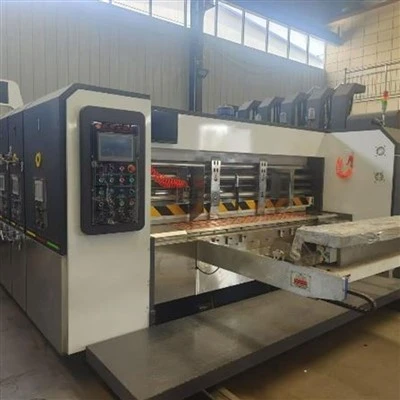
Flexographic machines: Commonly called the modern version of the letterpress. It's also referred to as flexo, as it was initially used to print onto corrugated cardboard. Flexography printing is used mostly for packaging.
Letterpress printing machines: Also known as relief or typographic printing machines. They are widely used to make copies of images by repeated direct impression of an inked, raised surface against rolls or sheets of paper.
Offset printers: The offset printing machines have been widely used in various applications. Because of its unparalleled quality to voluminous production and paper costs, it's by far the most dominant form of commercial printing technique, widely in use.
Application of Printing Machine
Label printing
Printing machines are used to produce various labels, such as product information labels, brand labels, and warning labels.
Carton printing
Cartons are widely used for product packaging. Printing machines can print colorful patterns, brand logos, and product information on the surface of cartons.
Flexible packaging printing
Flexible packaging materials like plastic bags and aluminum - plastic composite films also require printing. Printing machines can print product information, trademarks, and decorative patterns on these materials.
Corrugated board printing
Corrugated boards are commonly used for shipping and storage packaging. Printing machines can print shipping marks, product names, and handling instructions on corrugated boards.
Packing and Shipping of Printing Machine
|
Packing |
Tray+cushioning packaging |
|
Shipping |
Shipped by road, sea, rail |